
Spanish has “gender” for nouns, adjectives, pronouns and articles: MASCULINE and FEMININE. Spanish also has “number” for nouns, adjectives, pronouns and articles: SINGULAR and PLURAL.
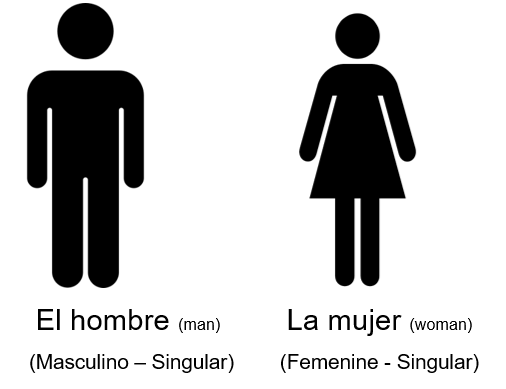
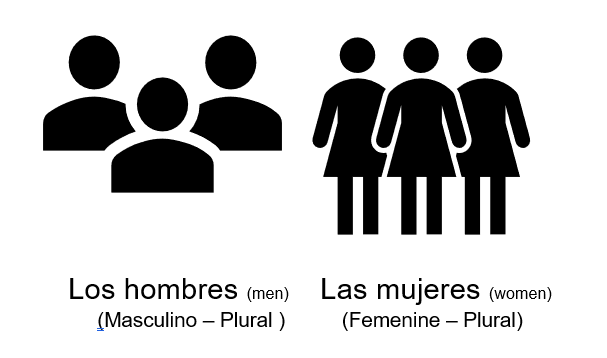
How to distinguish between Masculine & Femenine?
Masculine: Masculine nouns normally end in “O”, “N”, “S”, “L”, “R”, “E”. When nouns are plural, we add an “S” or “ES”.
El arbol – tree
El doctor – doctor
El libro – book
Los aviónes – airplanes
Los perros – dogs
Los humanos – humans
Femenine: Femenine nouns normally end in “A”. When nouns are plural, we add an “S” or “ES”.
La manzana – apple
La cabeza – head
La persona – person
Las mujeres – women
Las copas – cups
Las computadoras – computers
Most nouns are just one gender, masculine or feminine, but some nouns can be either MASCULINE or FEMININE. This rule normally applies with professions and animals.

Gender and exceptions:
In Spanish we also have exceptions to the rule with nouns and their genders. Let’s look at these examples:
Masculino
El arma – gunLa arma
El mapa – mapLa mapa
El problema – problemaLa problema
Femeninos
La mano – handEl mano
La radio – radioEl radio
La foto – photoEl foto
Gender and Adjectives:
Adjectives are words that describes nouns (people, objects, names, etc.). Some examples of Adjectives in Spanish: beautiful
- Hermoso / Hermosa – beautiful
- Pequeño / Pequeña – small
- Grande – big
- Joven – Young
The gender and number of an adjective in Spanish must match with gender and number of the noun.
El perro es bonito.
The noun “Perro” is masculine singular and the adjective “bonito” is masculine singular as well. In this case, the gender of the noun and the adjective match, therefore it is correct. Let’s look at another example:
1. El gato es bonitas – Incorrect
2. El gato es bonito – Correct
- The noun “Gato” is masculine singular and the adjective “bonitas” is feminine plural as well. In this case, the gender of the noun and the adjective match, therefore it is incorrect.
- The noun “Gato” is masculine singular and the adjective “bonito” is masculine singular as well. In this case, the gender of the noun and the adjective match, therefore it is incorrect.
Let’s see another example:
La doctora es bueno – Incorrecto
La doctora es buena – Correcto
Telegram FREE GROUP: LATAM TRAVELERS
- Exclusive content.
- I help with all your questions about SPANISH, LATAM, ARGENTINA.
- Practice your Spanish.
- Keep up to date with news from Latin America.
If you are ready to transform your life by mastering Spanish, join this group, Let’s embark on this journey together to unlock new opportunities!




 Learn Argentinian Spanish: Slang & Culture | Spanish Mindset