
If you want to sound truly local in Argentine Spanish, there’s something just as important as what you learn: what you can happily ignore. Here I’ll show you three big grammar areas that Argentines don’t really use in everyday life:
- The simple future (“I will go”, “she will work”)
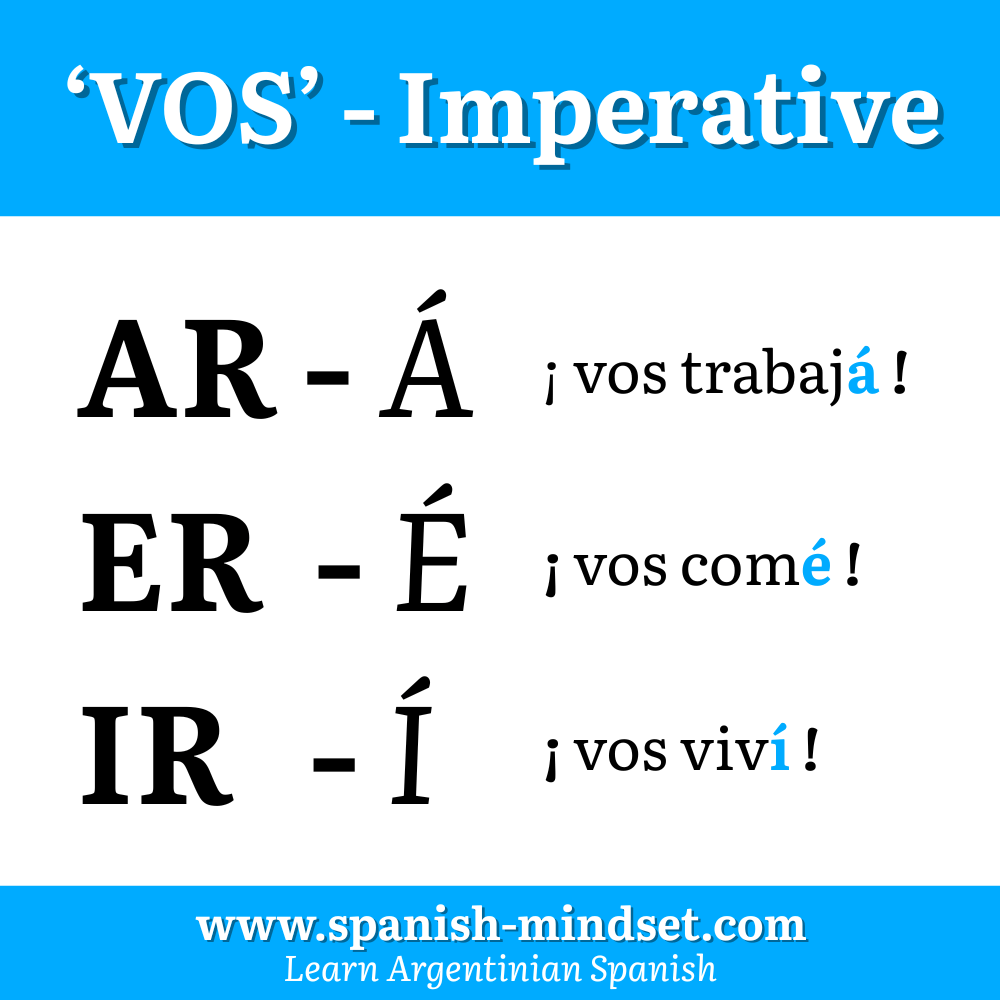
- The imperative (commands) with vos instead of tú
- The Preterite Perfect (Present Perfect, have + past participle verb)
This is essential if you’re:
- One of the many expats in Argentina trying to fit in
- A professional doing business in Argentina
- Someone who wants to be fluent in Argentine Spanish
- Someone retired or a new resident in Argentina enjoying life at a slower pace
- Or just living in Buenos Aires and tired of sounding like a textbook
Let’s clean up your Spanish so it matches the real-life language you’ll hear on the street, in cafés, and with friends.
Why Argentine Spanish Is So Informal
In Argentina, especially in Buenos Aires, we’re famously informal. We say vos instead of tú, we stretch vowels (trabajá, comé, viví), and we use tons of slang like che, boludo, re.
That same informality shows up in our grammar choices:
- We avoid some “bookish” structures.
- We prefer more natural, spoken forms.
- We even change the imperative (command forms).
If you want to Learn Spanish in Argentina or you’re planning a long trip Argentina-style, this is good news: you can simplify what you study and focus on what people actually say.
The Simple Future: Why “I Will” Sounds Too Formal
Let’s start with the simple future in Spanish, the tense you probably learned first in a textbook:
yo trabajaré, yo comeré, yo iré, vos harás, él/ella hará…
This tense absolutely exists in Argentina. You’ll understand it. People will understand you. But here’s the key:
In everyday Argentine Spanish, the simple future is rare and sounds formal.
We almost never use it in casual conversation.
What is the Simple Future?
Grammar books teach:
- trabajaré – I will work
- comerás – you will eat
- vivirá – he/she will live
It’s like using “I will…” in English.
How Argentines Really Talk About the Future
Instead of the simple future, we use ir + a + infinitive, especially with vos:
- Yo voy a trabajar. – I’m going to work.
- Vos vas a comer. – You’re going to eat.
- Él va a viajar. – He’s going to travel.
That’s basically the Spanish version of “I’m going to…” (not “I will”).
So:
- Textbook: Mañana trabajaré. – Tomorrow, I will work.
- Argentine everyday speech: Mañana voy a trabajar. – Tomorrow, I’m going to work.
We can say trabajaré, but…
When You Do Hear the Simple Future in Argentina
You’ll mainly hear the simple future in formal situations, for example:
- With a doctor:
- “Le recetaré un medicamento.” – I will prescribe you a medicine.
- “Le recetaré un medicamento.” – I will prescribe you a medicine.
- With a lawyer or accountant:
- “Llamaré a su banco y le avisaré.” – I will call your bank and let you know.
- “Llamaré a su banco y le avisaré.” – I will call your bank and let you know.
- In presentations, school, university:
- “El próximo año estudiaremos este tema en profundidad.” – Next year we will study this topic in depth.
- “El próximo año estudiaremos este tema en profundidad.” – Next year we will study this topic in depth.
In those contexts, sounding formal is expected. But:
Talking to friends, coworkers, your partner, or other travelers?
Use “voy a + infinitive”, not “trabajaré / comerás / etc.”
Mini Cheat Sheet: Future in Argentine Spanish
| English | Textbook Spanish (future) | Natural Argentine Spanish |
| I will go | Iré | Voy a ir |
| You (vos) will eat | Comerás | Vas a comer |
| She will live in BA | Vivirá en Buenos Aires | Va a vivir en Buenos Aires |
| We will travel to Argentina | Viajaremos a Argentina | Vamos a viajar a Argentina |
So if you’re planning to Travel to argentina soon, focus on the “voy a” structure. It’s what you’ll hear 99% of the time in bars, taxis, hostels and coworking spaces.

The Argentine Imperative: Commands with vos
Now let’s talk about the imperative, the tense of commands and instructions:
- “Go!”
- “Eat!”
- “Call me!”
- “Come here!”
In English, this is super easy. The command looks just like the infinitive:
- Go, eat, call, come – same form for everybody.
In Spanish, it’s more complicated. There are different forms for:
- tú
- vos
- usted
- nosotros
And in neutral Spanish (like many textbooks or Latin American courses), you usually learn the tú forms:
- ¡Trabaja! – Work!
- ¡Come! – Eat!
- ¡Vive! – Live!
But in Argentine Spanish, we don’t use tú. We use vos.
So the commands change.
Imperative with Regular -AR Verbs
Let’s start with a classic verb: trabajar (to work).
- Neutral tú form:
- ¡Trabaja! – (You) work!
- ¡Trabaja! – (You) work!
- Argentine vos form:
- ¡Trabajá! – Work!
- ¡Trabajá! – Work!
Hear the difference?
That á at the end is long and stressed: tra-ba-JÁ.
You see the same pattern with other -AR verbs:
| English | Neutral (tú) | Argentine (vos) |
| Speak! | ¡Habla! | ¡Hablá! |
| Sing! | ¡Canta! | ¡Cantá! |
| Work! | ¡Trabaja! | ¡Trabajá! |
👉 Tip: Stretch the “a” — hablá, cantá, trabajá. It sounds a bit Italian, right? That’s why people say we sound un poco tanos (Italian-like).
We still use:
- Usted trabaje. – (formal you) Work.
- Trabajemos. – Let’s work.
Those are the same as in standard Spanish. The big change is with vos.
Imperative with Regular -ER Verbs
Now with -ER verbs, like comer (to eat):
- Neutral tú: ¡Come! – Eat!
- Argentine vos: ¡Comé! – Eat!
Again, we move the stress to the last syllable and add an accent on é.
Some examples:
| English | Neutral (tú) | Argentine (vos) |
| Eat! | ¡Come! | ¡Comé! |
| Run! (from correr) | ¡Corre! | ¡Corré! |
| Have! (from tener) | ¡Ten! | ¡Tené! |
So in real life, a friend in Argentina will say:
- “Che, comé algo.” – Hey, eat something.
- “Corré que perdemos el bondi.” – Run, we’re going to miss the bus.
(bondi = bus in Argentine slang)
Imperative with Regular -IR Verbs
Now the -IR verbs, like vivir (to live):
- Neutral tú: ¡Vive! – Live!
- Argentine vos: ¡Viví! – Live!
Some common examples:
| English | Neutral (tú) | Argentine (vos) |
| Live! (vivir) | ¡Vive! | ¡Viví! |
| Go out! (salir) | ¡Sal! | ¡Salí! |
| Feel! (sentir) | ¡Siente! | ¡Sentí! |
So you’ll hear:
- “Viví tranquilo.” – Live calmly / take it easy.
- “Salí, disfrutá la ciudad.” – Go out, enjoy the city.
- “Sentí el clima de Buenos Aires.” – Feel the vibe of Buenos Aires.
Again, the key is that final stressed vowel: viví, salí, sentí.

Super Common Irregular Imperatives with vos
Now let’s look at some irregular verbs, which are very common in daily life. If you’re living in Buenos Aires, you’ll hear these every day.
3.1. The Verb ir – “to go”
This is the most important one.
- Neutral tú command: ¡Ve! – Go!
- Argentine vos command: ¡Andá! – Go!
We basically change the verb entirely:
Nobody in Argentina says: “Ve a la cocina.”
We all say: “Andá a la cocina.” – Go to the kitchen.
You’ll hear it in a million situations:
- “Andá a dormir.” – Go to sleep.
- “Andá a laburar.” – Go to work. (laburar = to work, informal)
- “Andá, andá, después hablamos.” – Go on, we’ll talk later.
If an Argentine tells you “andá”, they’re not saying andar (to walk) in this case; they’re using the imperative of ir in our dialect.
3.2. poner – to put
- Neutral tú: Pon. – Put.
- Argentine vos: Poné. – Put.
Examples:
- “Poné la mesa.” – Set the table.
- “Ponete la campera.” – Put your jacket on.
Notice ponete (vos) instead of ponte (tú).
3.3. decir – to say
- Neutral tú: Di. – Say.
- Argentine vos: Decí. – Say.
So instead of “dime”, we say:
- “Decime la verdad.” – Tell me the truth.
- “Decime cuándo venís.” – Tell me when you’re coming.
That’s why you’ll constantly hear “decime” in Argentina.
3.4. hacer – to do / to make
- Neutral tú: Haz. – Do.
- Argentine vos: Hacé. – Do.
Examples:
- “Hacé la tarea.” – Do your homework.
- “Hacé lo que quieras.” – Do whatever you want.
- “No me hacés caso.” – You don’t listen to me.
3.1. The Verb ir – “to go”
This is the most important one.
- Neutral tú command: ¡Ve! – Go!
- Argentine vos command: ¡Andá! – Go!
In daily conversation, these verbs show up everywhere, whether you’re staying for a short trip Argentina or moving here long term.

The Argentine Present Perfect (Preterite Perfect indicative)
The “preterite perfect indicative” is when we say “I have eaten today” or “I have been to Argentina.” Basically, it’s haber + verb in the past participle (have + verb past participle).
In Argentine Spanish, this is not very common, at least in casual and informal contexts (everyday life). This tense is considered very formal, so you probably won’t use it much.
If you are in formal contexts (a meeting with a lawyer, accountant, at the hospital, etc.), you will hear it often, but beyond that, not really.
What can we say to replace it?
We usually replace it with sentences in the present or past tense, because we tend to never use it directly.
In the following examples, both examples of each are correct, although of course the meaning changes slightly depending on the context.
For example:
Nobody says “Yo he trabajado todo el dia”
We say : -Yo trabajé todo el dia,
-Yo trabajo todo el dia.
Nobody says “Nosotros hemos probado el helado”.
We say: -Nosotros probamos el helado
-Nosotros probamos el helado
Note: remember that regular -AR verbs, conjugated in the “we” form, share the same conjugation in the present and past tenses (we tried).
Nobody says “Yo he visitado argentina.”
We say: -Yo visité argentina
-Yo visito argentina.
“Have you ever …?” Questions in Argentinian Spanish
In the case of the typical question “have you ever …?” we ask it in the past tense like this:
Have you ever done this?
¿Alguna vez vos hiciste esto?
¿Have you ever been to Argentina?
¿Alguna vez fuiste a Argentina?
Has he ever tried it?
¿Alguna vez él lo probó?
So now you know that this tense is formal. Your options for sounding more native and casual are to simply replace them with the present or past tense depending on the context.

Quick Practice: Sound More Argentine Today
Try transforming these neutral sentences into Argentine Spanish with vos and the ir + a future:
- Tú trabajarás mañana.
- Come más verduras.
- Yo he visitado Buenos Aires.
- Ve al supermercado.
- ¿Has hablado con Nico?
- Dime la verdad.
Possible Argentine versions:
- Mañana vas a trabajar. – Tomorrow you’re going to work.
- Comé más verduras. – Eat more vegetables.
- Yo visité Buenos Aires – I visited Buenos Aires.
- Andá al supermercado. – Go to the supermarket.
- ¿Hablaste con Nico? – Did you talk with Nico?
- Decime la verdad. – Tell me the truth.
If you practice these out loud, exaggerating the final vowel (comé, andá, hacé, decime), you’ll start to feel that Argentine rhythm.
How I Can Help You Speak Argentinian Spanish
If you’re serious about traveling, moving to Argentina, or just finally learning the language that you’ve always wanted to speak — I’m here to help.
I’m Nicolas Gonzalez Miño, Argentine Spanish teacher, owner of the YouTube Channel “Spanish with Nico”, the founder ofSpanish Mindset Academy – Learn Argentinian Spanish and the author of Mini Stories to Learn Spanish for Beginners, available on Amazon. Also, I have 2 podcastArgento Podcast, &Argentine Spanish from Scratch where I teach real Argentinian Spanish and slang.
In my YouTube Channel “Spanish with Nico”, with +1500 subscribers, I teach Spanish language and our dialect -Argentinian Spanish- and I explain everything about Argentinian history and culture.
In my individual programs (private 1:1 online classes), you can learn Argentine Spanish from scratch, for traveling, living, or doing business, and finally ACHIEVE FLUENCY in Argentine Spanish. Start learning Argentinian Spanish with me right now and be free in ARGENTINA!
👉 Ready to start?
Check the links below to join my 1:1 program to learn Argentinian Spanish in private lessons or contact me directly on here.
📌 Ready to Learn More?👉 Argentine Spanish 1:1 Programs: https://spanish-mindset.com/solo-lessons/
📘 Argentine Spanish Full guide: The Most Complete Guide to Argentine Spanish
💬 Join my Community: ARGENTINA | Spanish with Nico
📩 My YouTube Channel, Spanish with Nico.




 Learn Argentinian Spanish: Slang & Culture | Spanish Mindset